BODHI
2009/2026, zinc alloy, stainless steel (55 × 56 × 50 cm)
Edition of 1+1 AP
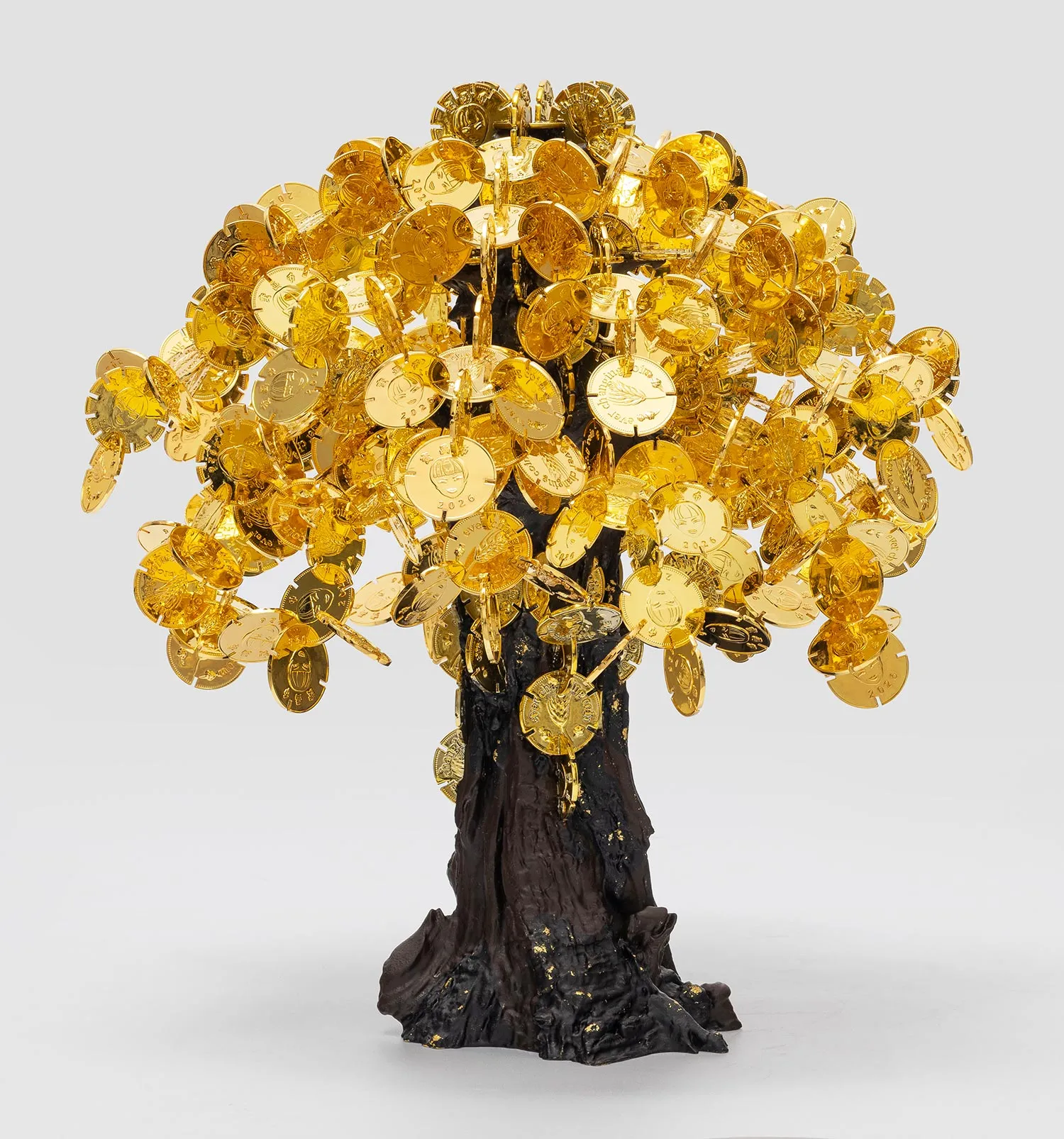
In The Philosophy of Money, Georg Simmel argues that human beings seek order within a fundamentally chaotic world, constructing systems of stability in order to situate objects and define relationships. Regardless of whether such systems are real, once accepted as truth, they become sustained through belief—woven into narratives, rituals, and imaginaries that produce idols and totems to mediate the relationship between humanity and the “superhuman.”
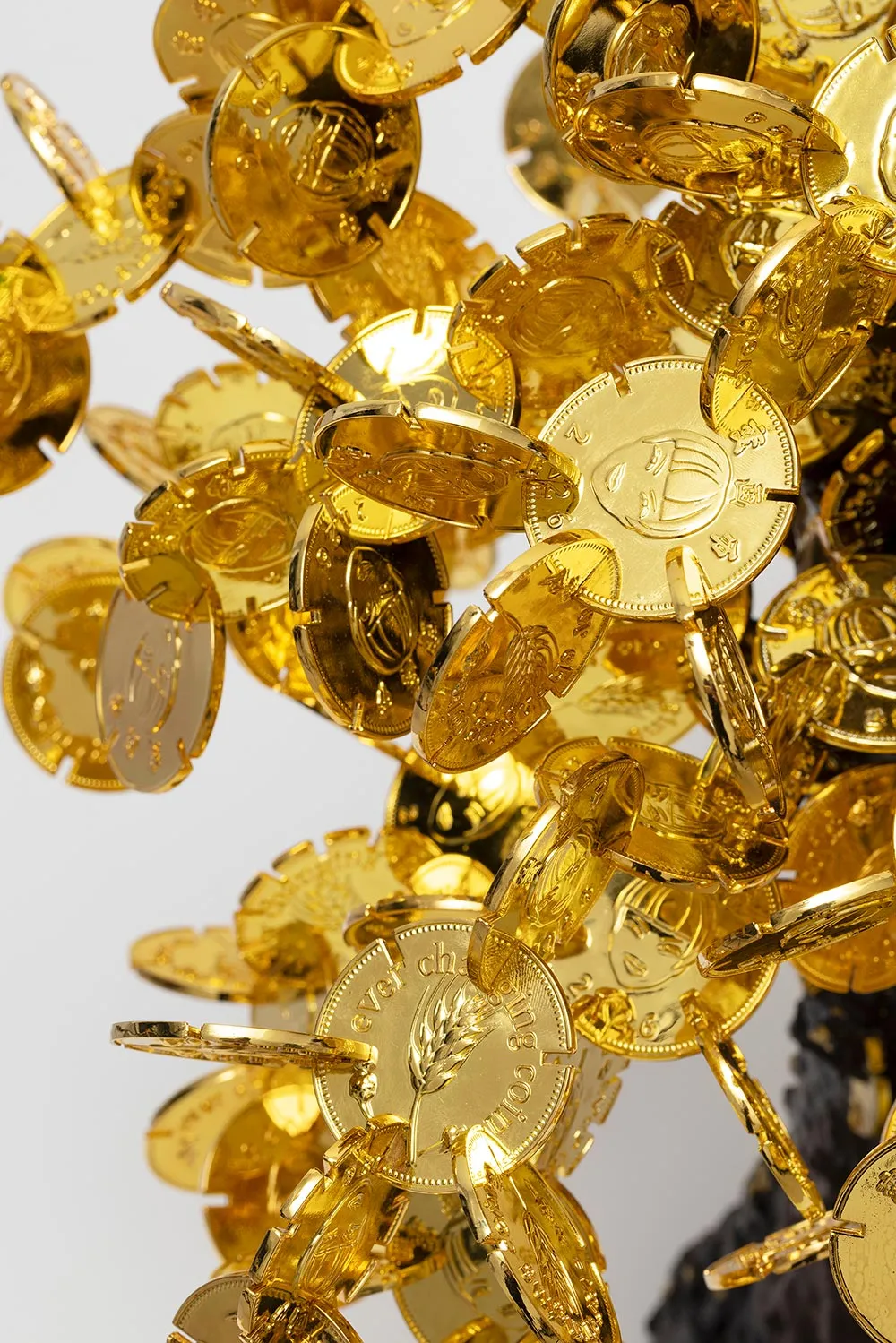
Bitcoin emerged in 2009 under precisely such expectations. In this work, Wang Hua draws upon a form derived from small toy components—circular plastic discs once distributed as gifts in Chinese children’s snacks during the 1990s and early 2000s, which could be endlessly assembled through side grooves.
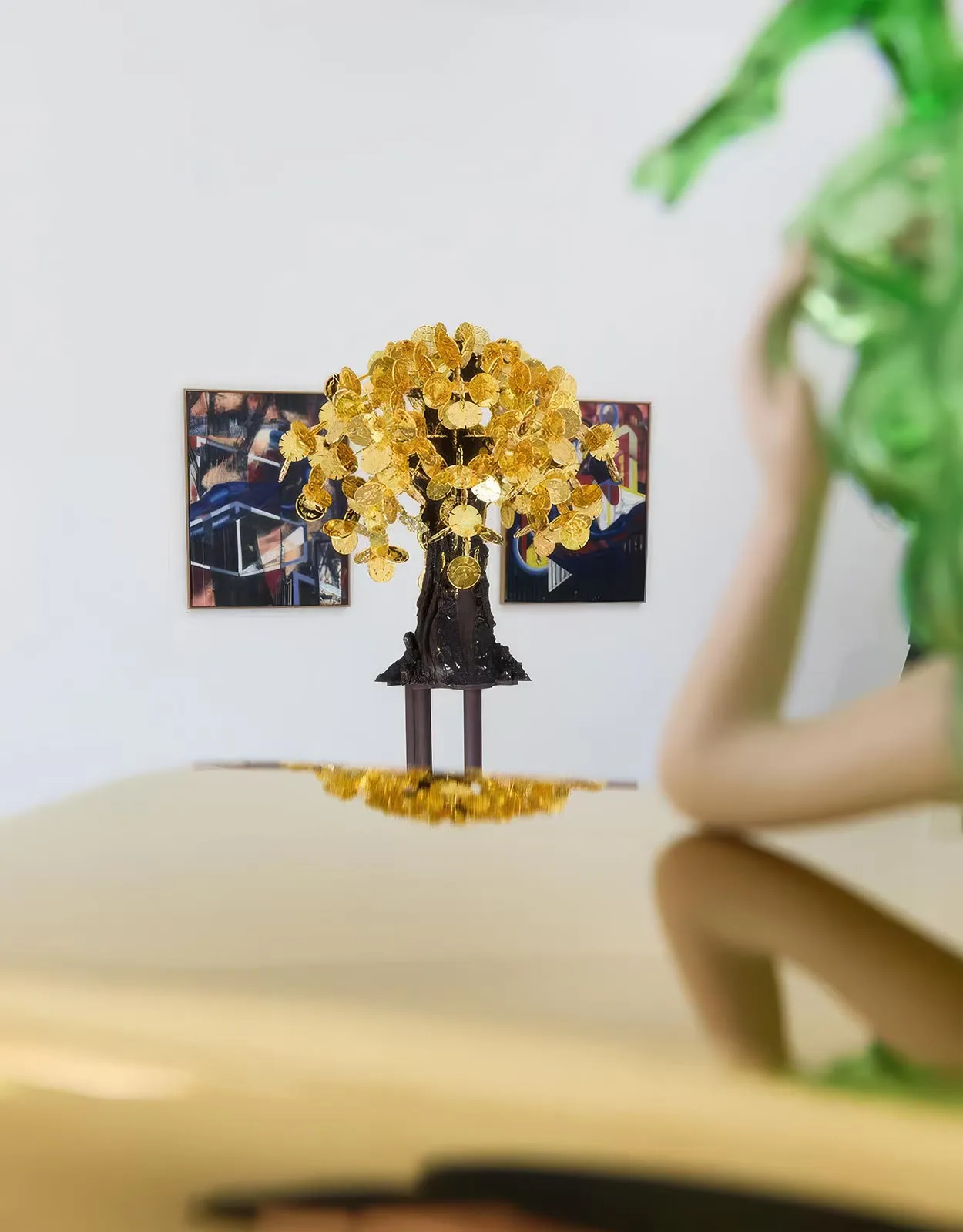
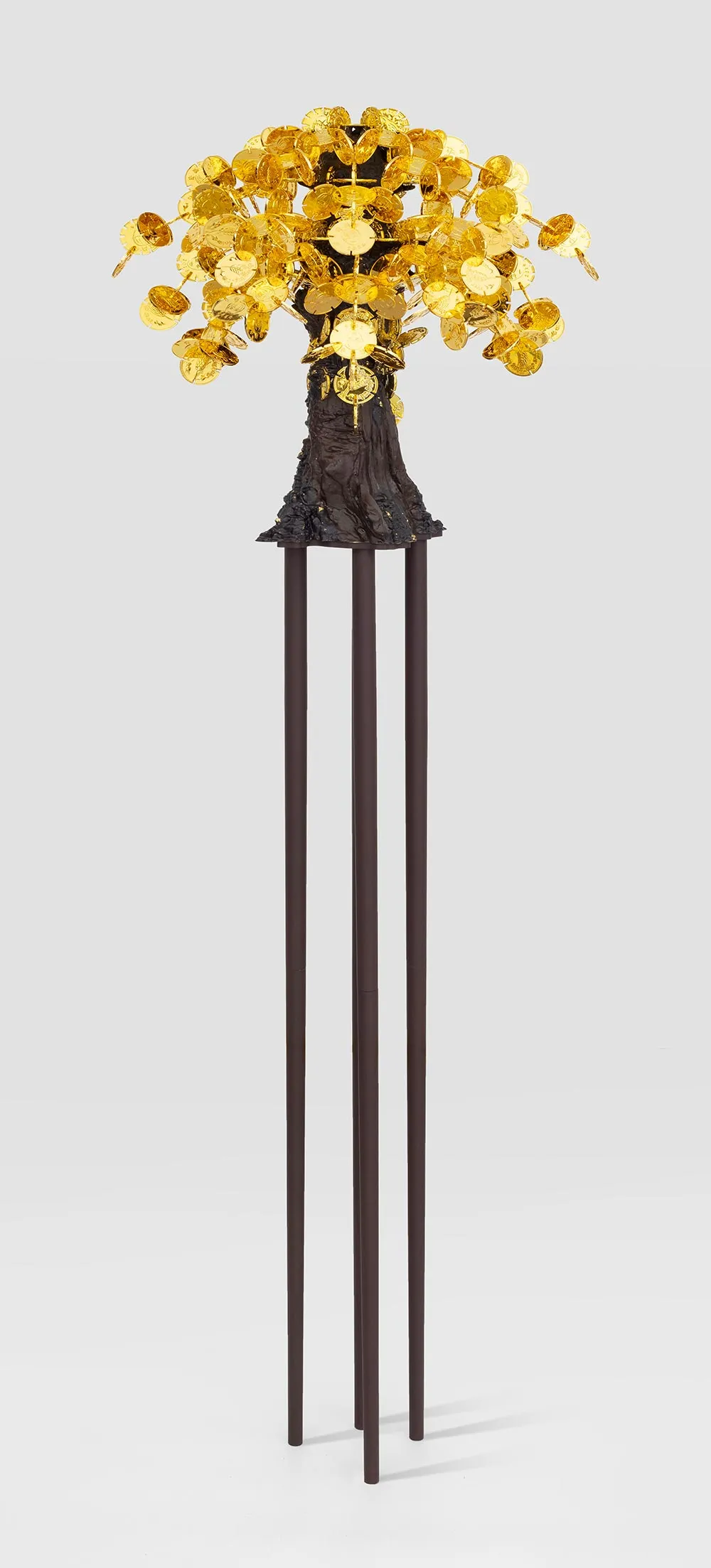
Referencing the Diamond Sutra’s notion of “mistaking a yellow leaf for gold,” alongside the mythological motif of a “money tree” that sheds coins when shaken—objects historically used as funerary artifacts between the Eastern Han and Wei, Jin, Southern and Northern dynasties to guide the deceased to the afterlife—Wang Hua reimagines this symbolic system. Her “money tree,” as she notes, is intended “for when one might need it after swallowing the blue pill.”